
Pool design • October 2026
Skimmer, Overflow, Infinity or Pipeless? How to Choose the Right Pool Filtration System
The right pool filtration system is decided by how the pool will be used, where it sits and what the site allows — not by which one looks best in a brochure. After three decades of building pools, this is the one decision we insist on locking before a single drawing goes to site.
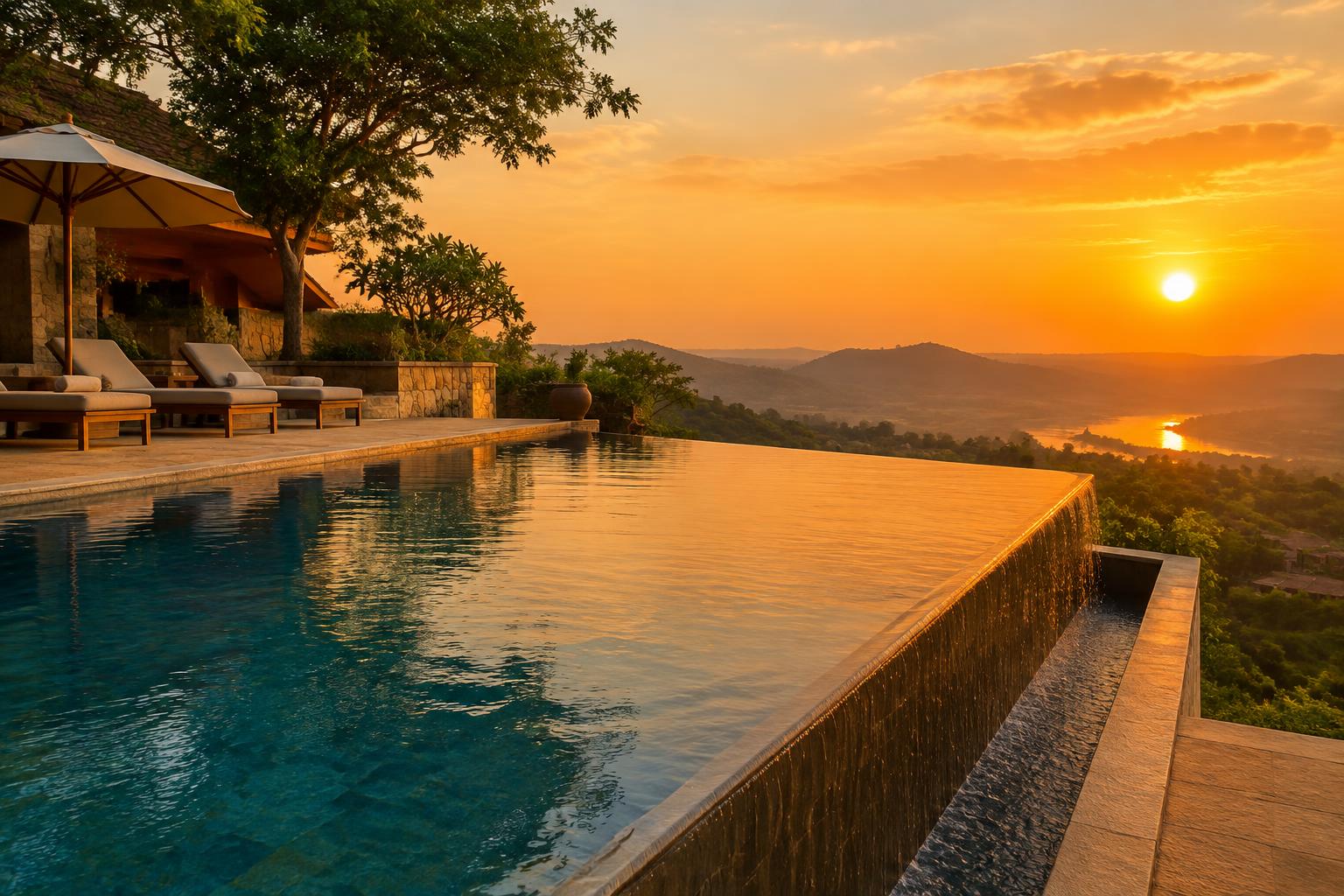
Why so early? Because filtration is not a box you add later. It decides the water level, the shell design, the pipe routes, the plant room, whether you need a balancing tank, and even how the pool looks at sunset. This guide walks through each option the way an engineer weighs it, so you can make that call with confidence.
The four filtration systems, explained simply
1. Skimmer pool
In a skimmer pool, the water sits about 100–150 mm below the coping. Skimmer boxes built into the wall draw the top layer of water, along with leaves, dust and oils, to the filter. A main drain at the deepest point pulls from the bottom, and filtered water returns through wall inlets.
It is the most common residential system worldwide, and for good reason. It is simple, proven, economical to build and easy for a homeowner to maintain. It is also the natural partner for vinyl liner pools. The trade-off is that skimmers only clean the surface near them — corners and the far side can collect debris, and the visible water line shows a band where scum and scale settle.
2. Overflow pool with gutter and balancing tank
In an overflow (deck-level) pool, the water is filled right to the edge. It spills continuously over the full perimeter into a gutter with a grating, then flows by gravity to a balancing tank, also called a surge tank. The pump draws from this tank, filters the water and returns it through inlets in the pool floor.
The balancing tank does three jobs. It absorbs the water pushed out when swimmers jump in, holds the surge from waves and rain, and keeps the pump supplied at a steady level with automatic top-up. This is the system for hotels, clubs, schools and competition pools — the whole surface is skimmed all the time, floor inlets push water upward evenly, and the result is clearly better hygiene under heavy use. It does cost more and needs precise civil work.
3. One-side infinity (vanishing edge)
An infinity pool lowers one wall, called the weir, so water flows over it in a thin sheet into a catch basin below. From the main viewing angle, the water seems to merge with the horizon, a valley or the sea. Only one side is infinity; the other three sides use either skimmers or an overflow gutter. The catch basin acts as the balancing tank for the edge, and usually a dedicated pump keeps the sheet of water running.
It is the most dramatic design, and the most demanding to engineer. The weir must be dead level to within a few millimetres along its full length, or the water will pour from one end and dry out at the other.
4. Pipeless filter system
A pipeless system packs the pump and a cartridge filter into a single unit built into the pool wall, at water level. There is no plant room and no buried pipework between pool and filter. It shines on terraces, rooftops, small plots and retrofits, where digging trenches or building a plant room is impractical. Installation is faster, and the risk of hidden underground leaks is close to zero.
The limit is capacity. Pipeless units are sized for small to mid-size residential pools with light bather load, and they leave less room for add-ons like heat pumps, multiple water features or advanced automation.
Side-by-side comparison
| Skimmer | Overflow + balancing tank | One-side infinity | Pipeless | |
|---|---|---|---|---|
| Water level | 100–150 mm below coping | Flush with deck | Flush at weir edge | 100–150 mm below coping |
| Surface cleaning | Near skimmers only | Full perimeter, continuous | Weir side + skimmers/gutter elsewhere | Near the unit only |
| Best for | Homes, villas, farmhouses | Hotels, clubs, schools, societies, competition | Hill, sea or valley views; luxury villas, resorts | Terraces, rooftops, small plots, retrofits |
| Bather load | Low to medium | High | Low to medium (high with gutter on other sides) | Low |
| Plant room | Yes | Yes, plus balancing tank | Yes, plus catch basin | No |
| Build cost (relative) | Baseline | Higher | Highest | Low to baseline |
| Running cost | Low | Medium to high | High | Lowest |
| Water and heat loss | Low | Higher | Highest | Low |
| Civil precision needed | Standard | High (level overflow edge) | Very high (dead-level weir, structural wall) | Standard |
| Maintenance | Easy, homeowner-friendly | Needs trained staff | Needs trained staff | Easiest |
Costs are relative because actual figures depend on size, finish and site conditions. Ask us for a site-specific estimate.
12 factors that decide your filtration system
These are the questions we work through on every site visit. No single factor decides alone; the right answer is where they agree.
1. Who will use the pool, and how many at once
Bather load is the first and biggest factor. Every swimmer brings sweat, sunscreen, hair and body oils, and most of it floats at the surface. A family pool with four to six people at a time is well served by skimmers. A hotel pool with 30 guests on a Sunday afternoon is not, because skimmers cannot clear the surface fast enough. For commercial and public use, overflow is the engineering standard.
2. Pool size and turnover rate
Turnover is the time the system takes to filter the full pool volume once. Residential pools typically run a 6–8 hour turnover, while commercial pools need 3–4 hours or faster. Faster turnover means bigger pumps, filters and pipes. Large pools also need more skimmers, roughly one for every 25–40 m² of water surface, and beyond a point an overflow gutter becomes more effective than adding skimmer after skimmer.
3. Site levels and topography
The ground decides more than most clients expect. An infinity edge only makes sense where there is a view and a natural drop to hide the catch basin. An overflow pool needs the balancing tank below pool water level, so water can flow to it by gravity. On a site with a high water table or hard rock, that deep tank adds real cost, and we account for it early.
4. Location: ground, podium, terrace or rooftop
On a terrace or rooftop, every tonne counts. A full balancing tank or catch basin adds significant load that the building's structure must be checked for by a structural engineer. This is where pipeless and compact skimmer systems earn their place — they avoid deep tanks, keep pipework short, and cut the number of slab penetrations that need waterproofing.
5. Space for a plant room and balancing tank
Skimmer and overflow pools both need a plant room for the pump, filter, chlorinator and controls. Overflow and infinity pools also need room for the balancing tank or catch basin, close enough to keep pipe runs short. On tight urban plots where every square metre has a use, pipeless removes the plant room entirely. Where space exists, a proper plant room gives better long-term serviceability.
6. Construction budget
Skimmer pools are the baseline. Overflow adds the gutter, grating, balancing tank, floor inlets and tighter civil tolerance, and infinity adds a structural weir wall, catch basin and often a second pump. Pipeless can match or undercut a skimmer pool, mainly by saving on the plant room and trenching. Set the budget honestly at the start so the design is not cut back halfway.
7. Running and maintenance costs
Capex is a one-time cost; electricity, water and chemicals are paid every month for 20 years. Overflow and infinity pools run pumps longer, and their moving water surface loses more water and heat to evaporation. If the pool will be heated, this matters even more — an infinity edge can lose a noticeable share of heat through the falling sheet of water.
8. Design intent and aesthetics
Some clients want the pool to be the centrepiece of the property. A brimming overflow edge gives a calm, mirror-like surface level with the deck, and an infinity edge creates the view that sells a resort. A skimmer pool shows a visible water line and skimmer lids, which some find perfectly fine and others don't. There is no wrong answer here, but the look must be chosen knowing what it costs.
9. Climate, dust, leaves and monsoon
Indian conditions test filtration hard. Dry-season dust, falling leaves from nearby trees, and heavy monsoon downpours all land on the surface first. Overflow pools handle debris and rain surge well, because the balancing tank absorbs the extra water and an overflow pipe carries the excess away. Skimmer pools need skimmers placed on the downwind side and a rain overflow outlet, or the water level will rise over the skimmer openings in a heavy storm.
10. Water source and hardness
Many sites run on borewell or tanker water with high hardness. Hard water leaves white scale wherever water evaporates — along skimmer water lines, gutter gratings and especially the face of an infinity weir. This does not rule out any system, but it changes what you must plan for. Softening, pH and calcium control, and a realistic cleaning schedule should be part of the design, not an afterthought.
11. Who will maintain the pool
A homeowner can manage a skimmer or pipeless pool with basic weekly care. Overflow and infinity systems need someone who understands balancing tank levels, auto top-up, backwash timing and water chemistry. Hotels and societies usually have trained staff. For a private villa, ask honestly whether you will have that support every week of the year.
12. Pool type, standards and future plans
For competition or training pools, deck-level overflow is generally required by swimming federation standards. Commercial and public pools may also face local health or building requirements. The pool's construction method matters too — vinyl liner pools work most naturally with skimmers, while overflow and infinity designs are usually built in concrete with tile. Finally, think ahead: heat pumps, salt chlorinators, water features and automation are easiest to add when the plant room was planned for them.
Quick decision guide
Start with the row that matches your project; then check it against the 12 factors above.
| Your situation | Our usual recommendation |
|---|---|
| Private villa or bungalow, family use, ground level | Skimmer pool (vinyl liner or concrete) |
| Terrace, rooftop or small urban plot with no space for a plant room | Pipeless filter system |
| Retrofit into an existing building or garden | Pipeless, or a compact skimmer system |
| Hotel, club, school or housing society pool | Overflow gutter with balancing tank |
| Competition or training pool | Deck-level overflow, per federation standards |
| Villa or resort with a hill, valley or sea view and a natural drop | One-side infinity with skimmers on the other sides |
| Luxury resort with heavy guest use and a view | One-side infinity with overflow gutter on the other sides |
| Tight budget, low running cost, easy upkeep | Skimmer or pipeless |
Mistakes we see on site, and how to avoid them
Most pool problems we are called to fix trace back to the filtration decision, not the equipment. These are the ones we see most often.
- Undersized balancing tank. When a crowd jumps in, the tank overflows to drain and the water is wasted; when they leave, the pump runs dry. Size the tank for bather displacement, surge, rain and backwash, not a thumb rule alone.
- Overflow edge out of level. Even a few millimetres of error means water spills from one side and stands still on the other. The edge must be set with precision instruments and checked before tiling.
- Infinity edge without a view or a drop. An infinity edge facing a boundary wall adds cost and running expense with none of the effect.
- Skimmers on the wrong side. Skimmers placed upwind fight the breeze instead of using it. Always place them where wind pushes debris.
- No rain overflow in skimmer pools. In a monsoon downpour, the water rises above the skimmer mouths and surface cleaning stops. A simple overflow outlet prevents it.
- Pipeless on a pool it was never sized for. A wall unit on a large or busy pool will struggle to keep water clear. Match the unit to the volume and use.
- Plant room too far away. Long pipe runs mean bigger pumps, higher power bills and more joints that can leak. Keep the plant room as close to the pool as practical.
Frequently asked questions
Can I change from a skimmer to an overflow system later?
Rarely, and not cheaply. Overflow changes the shell height, edge detail, floor inlets and adds a balancing tank, so it is effectively a rebuild. Decide before construction.
Is an overflow pool always cleaner than a skimmer pool?
Under heavy use, yes. For a family pool with light use, a well-designed skimmer pool with correct turnover and chemistry stays just as clear.
Can an infinity pool be built on a flat site?
Technically yes, by raising the pool or sinking a catch basin, but the effect depends on a view below the edge. On flat land, a full overflow edge often gives a better result for the money.
Do pipeless systems work for vinyl liner pools?
Yes. They suit vinyl liner and compact pools well, especially on terraces and in retrofits.
Which system uses the least electricity?
Pipeless and skimmer pools generally do, because they move less water and lose less to evaporation. Variable-speed pumps reduce running costs on any system.
Plan it right, once
The filtration system is the heart of a pool. Choose it by use, site and budget, and the pool will stay clear, efficient and trouble-free for decades. Planning a pool? Talk to the Dreamz Pools team. We will visit your site, study the levels, space and usage, and recommend the system that fits — before a single brick is laid.
Related services
Pool design, construction and liner systems across India.
Pool Design
swimming pool design
3D pool designs, plans and sections for architects, interior designers and homeowners.
Learn more
Pool Construction
swimming pool construction
End-to-end swimming pool construction in India — concrete, FRP and membrane-lined pools, fully filtered and ready to swim.
Learn more
Dreamz PVC Membrane
dreamz pvc membrane
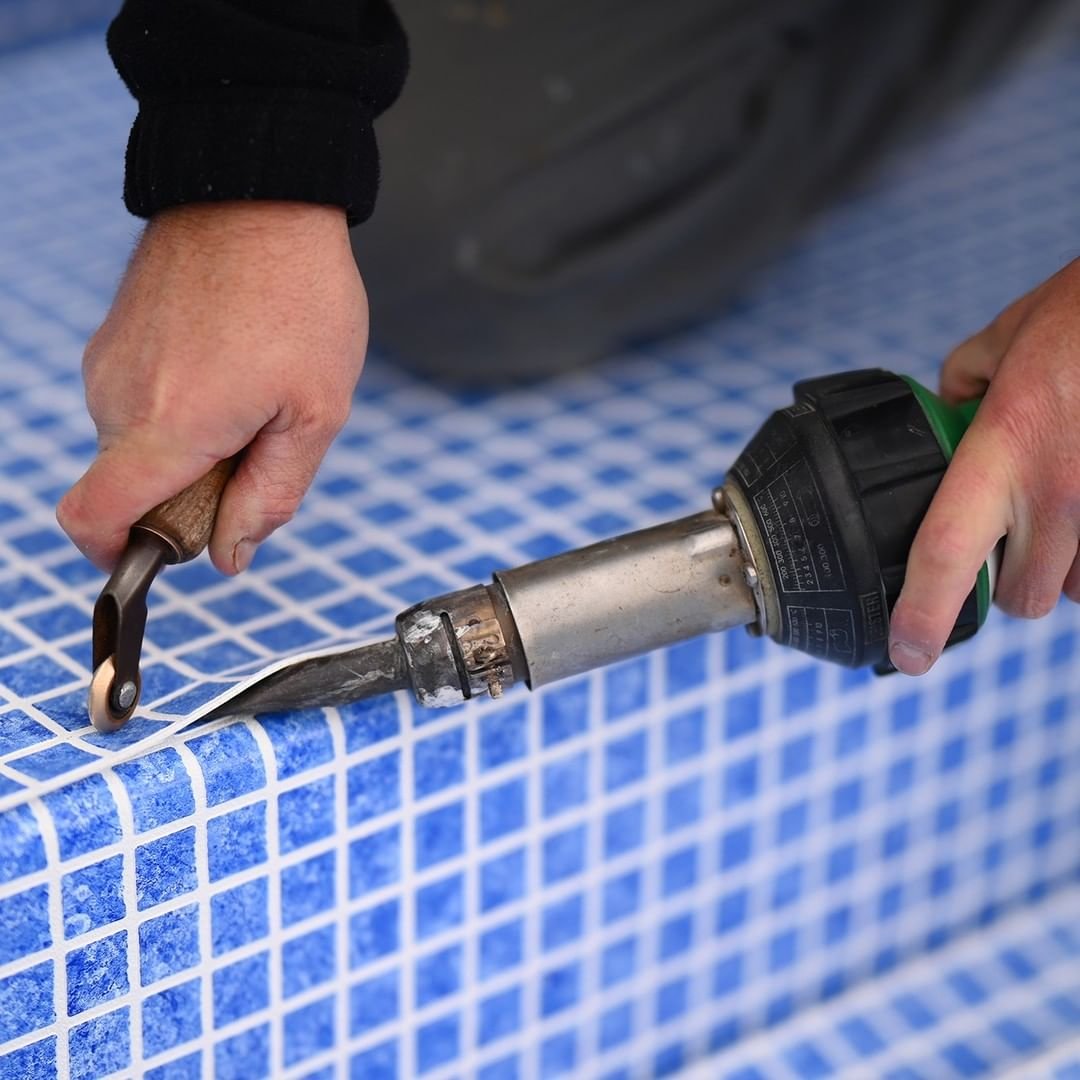
Dreamz PVC Membrane — reinforced PVC pool liners in India with up to a 12-year water-tightness warranty.
Learn more

Rooftop Pools
rooftop swimming pool
Light-weight, leak-proof rooftop pools engineered for terraces, penthouses and high-rise hotels.
Learn more
Planning a pool?
Book a site visit — we'll study your levels, space and usage, and recommend the filtration system that fits.